Special needs after-school care in Singapore: options, subsidies, and how to choose

About me
Now, after years of good and bad decisions, I hope to bring clarity to your situation by summing up what is out there on one page.
Looking back, I wished for a guide like this when I was finding my way. So I hope I can help you now, with my experience.
What “special needs after-school care” actually means
So what does a typical after-school care program usually provide?
According to the MSF website, student care provides lunch and offers a safe place after school to do homework. Some student care centres offer extracurricular activities such as coding classes or subject tuition. Most, if not all, mainstream student care centres (SCC) are built around neurotypical children: large group classes, bright and noisy spaces, and simple homework supervision.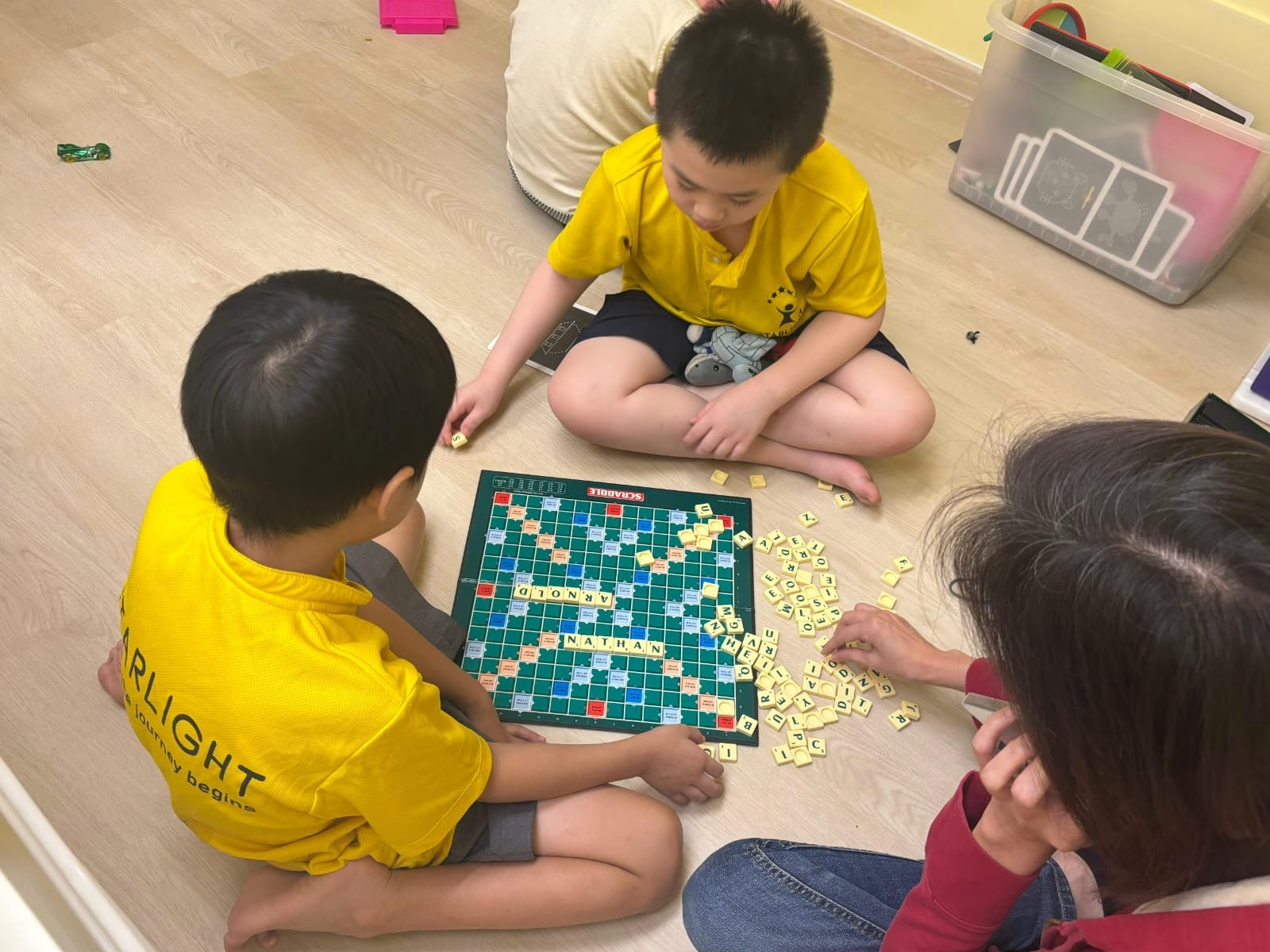
Play skills are developed through guided social interactions, which is one aspect of the Starlight RISE™ programme.
What is different for autistic/neurodivergent children?
Our children need predictable routines. In a world that is constantly changing, a routine is like a solid anchor, anchoring them to a safe place. Most of us prefer a routine as well. Very often we have a fixed time to go to the market or do our laundry, but when there is a change, such as a wedding celebration, we can change because we know we need to, but not our children.
They do well in a smaller group because they get distracted easily. They may also have a joint attention issue, and a lot of redirection is required.
They are also very visual, and they prefer to look rather than listen. So they do well in places where the rules are visually clear.
Very often, they reach a point where they cannot bear it or experience sensory overload, and they need an outlet to meltdown. Instead of discouraging them and thinking that it is bad behaviour that needs to be curbed, a good educator trained in special needs knows what to do, to give them space to cool down and recharge.
SPED (Pathlight, SAMS) vs mainstream
Knowing that our child is different is the first step. Knowing what to do next is the second step. And Dr Mae Wong (KK Hospital) pointed it out rightly so. Why put your child in a mainstream class of 1:40 when you can let him go to a more comfortable setting of 1:8 or 1:6?
You will definitely need to pay more in a smaller class setting, but that journey will save you a lot of headaches down the road. As you may well know by now, we all dreaded the phone call from the school teachers telling us that something had gone wrong again…
And this is perhaps the main reason why a specialised student care with small class size and autism aware staff matter more than big banners about “inclusive” programmes.
Main options for special needs after-school care in Singapore
Mainstream school-based and community student care centres.
There are SCCs set up directly in primary school. They provide meals and guidance on schoolwork and enrichment programs. They are usually large classes of between 1: 20 to up to 30 students in a class. There is also a student care fee assistance (SCFA) for eligible families. Centres who wish to offer this grant must register with MSF as SCFA administrators. We have parents who tried to put their kid in mainstream after-school care, and the child quickly shut down in a big and noisy group, and they soon realised it was not a realistic path for their child.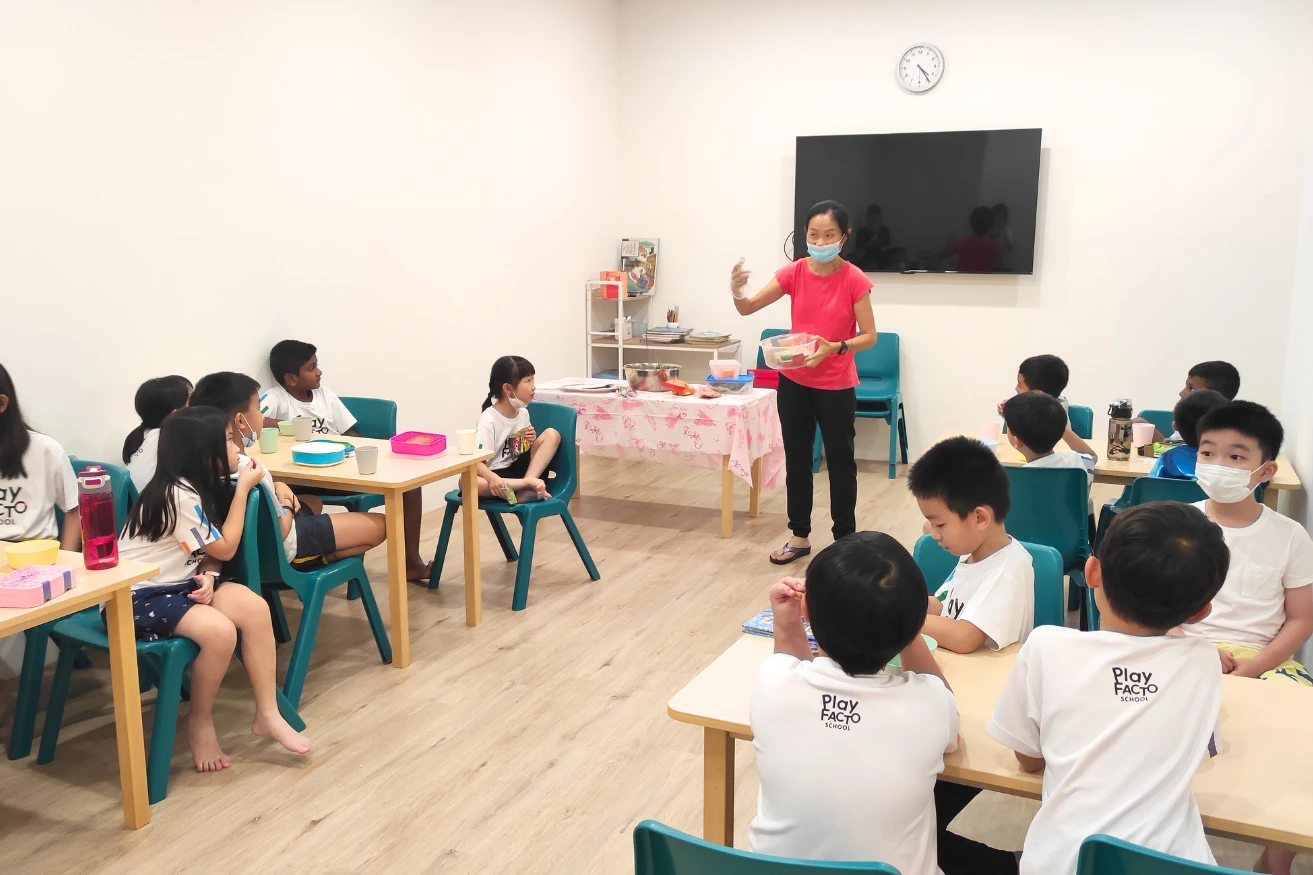
Convenient location at or near school
Cheaper than specialised centre
Same classmates and routine (because it is near their school)
Staff may not be trained for autism.
Large class sizes can mean sensory overload and more risk of bullying or isolation.
Programme is not designed around social and emotional learning for autistic kids.
Special Student Care Centres (SSCC) tied to SPED schools
Define as Special Student Care Centres (SSCCs), they provide before- and after-school care for students aged 7 – 18 years who attend SPED schools. Families may receive ComCare Student Subsidies (SCFA) when their child attends an SSCC and meets income criteria. There are many SSCCs by social service agencies like AWWA, MINDS, APSN, Rainbow Centre, St Andrew’s Mission School and others. Yohanes and many of our students are in Pathlight or mainstream school. But some children may benefit from SSCC more because they need more daily care than Starlight can offer.
Staff and peers are from the same SPED environment.
Structured support for daily living skills and social skills.
Subsidised fees for lower-income families.
Usually only open to children already in SPED.
Locations are tied to the SPED school, so travel can be long.
Places may be limited, waiting lists possible.
Private specialised centres for autistic and neurodivergent children
This group offers a private after-school or enrichment centre that focuses on specific profiles, such as autistic children in Pathlight. They also cater to children with learning or developmental differences. These types of classes are suitable for neurodivergent children who can learn in small groups but struggle in mainstream SCCs. Starlight is one of the private centres that offers such programmes. Unlike other SCCs or SSCCs, Starlight only accept student who are in mainstream, Pathlight or SAMS with an intelligence quotient (IQ) of at least 75. Starlight operates small-group classes with a 2:8 learner-to-therapist ratio and runs targeted programmes according to the age of the students.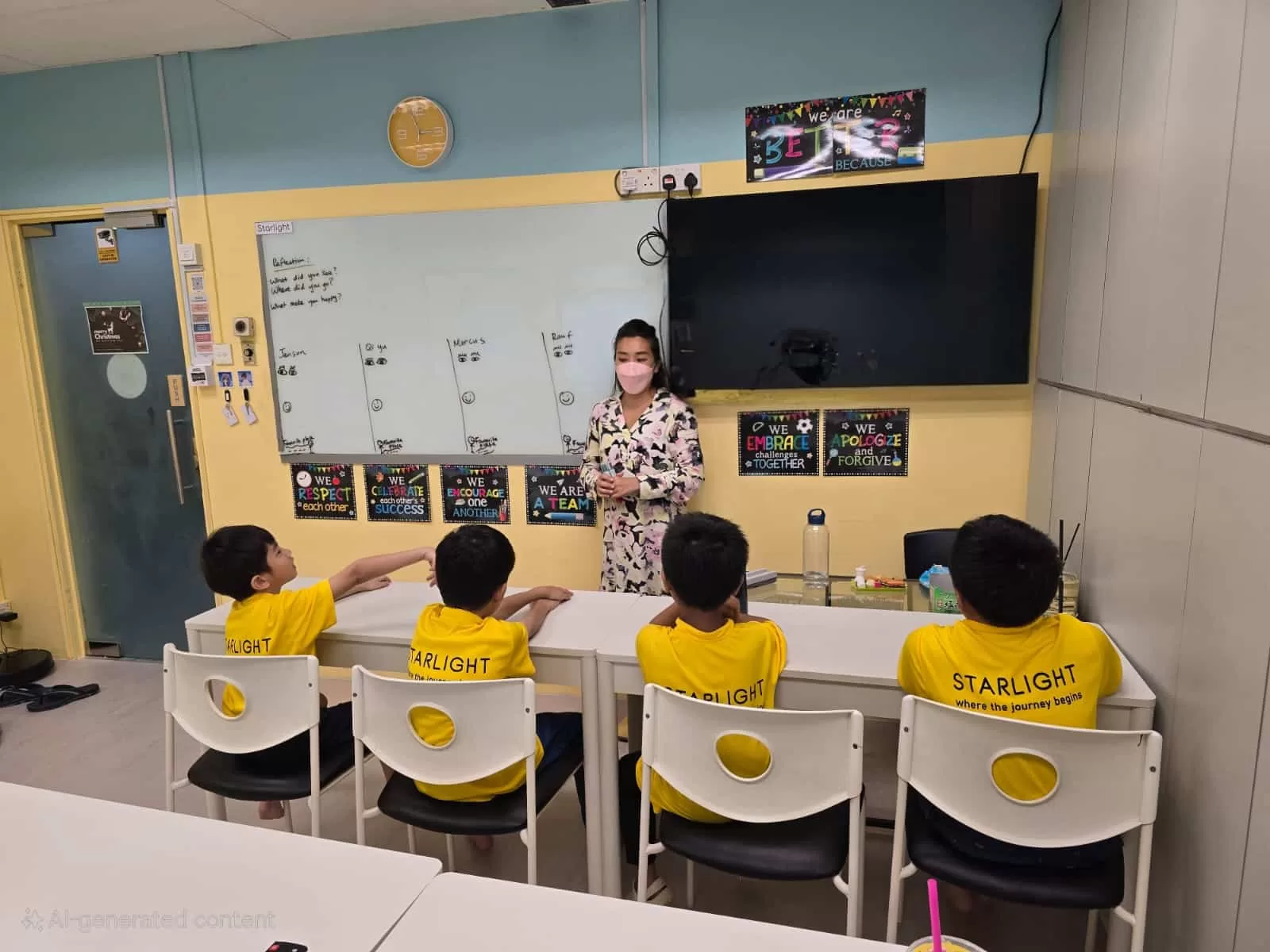
Lower Primary
Foundation, Primary 1, 2
Social and community skills
Alternative ways to stim, managing volume levels, maintaining attention, and developing joint attention skills.
Homework management
Upper Primary
Primary 3, 4, 5 & 6

Practicing with assessment books and mastering exam techniques, like understanding command words and managing time effectively.
We will use effective study strategies like active recall and the Pomodoro Technique. We will reinforce the importance of studying early and reviewing assessment book with them.

Increase study time gradually:
Start with short sessions and extend them as focus improves. Use a timer to stay on track.
Practice under exam conditions:
Take full-length practice exams in a similar environment to the actual test. Begin with shorter sessions and gradually increase the duration.
When Yohanes started school back in 2019, there were no after-school centres focused solely on mainstream autistic children. Most places mixed a wide range of disabilities and needs, which could lead to higher functioning autistic children stagnating or even regressing in their abilities. This gap is what led me to create Starlight.
Environment and curriculum designed around autism and neurodivergence.
Strong focus on social skills, emotional regulation, and life skills, not only academics.
Often closer collaboration with therapists and parents.
No government student care subsidies at the moment.
Fees are higher than mainstream SCCs.
Quality varies by centre, so visits and hard questions are key.
Patchwork solutions many families use
It is often said it takes a village to raise a child, and in this case, it is. The most common after-school care arrangement is our ever-reliable grandmothers or domestic helpers at home. The child usually goes from school to ABA/OT/Speech therapy, then home. It is a mix of tuition centres, therapies and home care. This can probably work, as it has with Yohanes (there wasn’t a centre like Starlight back in 2019). But this arrangement lacks a stable peer support group. Social learning is very often missing as well. A child can’t learn to function in social groups if they are at home alone with their toys. He will miss out on learning vital skills like sharing, saying no, and making friends. Back then, we chose this option as we did not have a choice. We spent between 2 to 3k monthly on therapy fees, and we were feeling burned out while still feeling unsure if we were doing the right thing. Yohanes is now 13, and we think he has missed out on friendship skills, which we hope to address with other children through the Starlight RISE™ programme.
This option is almost free of charge.
The safest option is home.
Can run ABA at home which is often the best place to do so.
Your child will miss out on the opportunity to make friends
Lacks a stable peer support group
It is hard on care giver's time and energy
Subsidies and financial support for student care and special needs services
Don’t need to wander in the wilderness like us. We spent hours digging through websites and forums so now you don’t have to.
Student Care Fee Assistance (SCFA) and ComCare
SCFA provides subsidies for children in student care centres registered with MSF as SCFA administrators. SCFA can cover a large part of SCC or SSCC fees for lower-income families. Eligibility is based on- Singapore Citizenship
- Parent(s) in work
- Household income (GHHI ≤ S$4,500 for smaller families) or per capita income (PCI ≤ S$1,125 for larger families).
Other financial help linked to school and disability
There are other assistance skills as well, such as MOE Financial Assistance Schemes (FAS), which cover school fees, textbooks, uniforms and meals for Singaporean students in mainstream schools. SG Enable / Enabling guide is a comprehensive portal for many government schemes, and that should be your first stop if you are looking for subsidies.- Disability-related financial schemes.
- Transport support.
How to decide what is right for your child?
Step 1 – Understand your child’s profile and needs
You have been with your child the most, so you will know what is best for him or her. Here is a list of things to reflect on before deciding. We once placed Yohanes in an inclusive preschool that claimed to be inclusive, but we soon realised that it was just a slogan. He had a toileting incident, which led us to believe he was likely left alone because school staff did not know how to support him.What is his diagnosis and key challenges?
Autism, ADHD, speech delay, anxiety issues.
Current school
Mainstream, Pathlight, other SPED schools
How does your child cope with noise, change and group work?
How independent is your child with homework and self-care?
Step 2 – Map your weekly rhythm (and your own limits)
This takes us back to when Yohanes was younger and participating in his EIP program. We had to rush him from one place to another, which was quite hectic. My parents often had to step in to help when Alex or I were busy. Balancing work and EIP programs was challenging and clearly unsustainable. This is why we now advise parents to look for programmes as a whole, for the entire week, rather than just whether he can fit into a single program slot.
School hours and travel.
Therapies and medical appointments.
Work schedules for caregivers.
Energy levels: when the child is at their best and worst.
Step 3 – A simple checklist to compare centres
This simple checklist will help you to discern between what’s real and a plain marketing slogan. I wished I had made this earlier for myself
Staff training in autism and neurodivergence.
Class size and student–staff ratio.
Peer group (are they children like mine?)
Sensory environment (noise, lighting, visual clutter).
Programme content (homework support, social skills, life skills, emotional regulation).
Communication with parents.
How they work with school and external therapists.
When SPED + SSCC is likely the best fit
If your child is already in a SPED school and needs intensive support and constant close supervision, and if you need subsidies and prefer a one-stop arrangement. Talk to the school’s social worker. Check the enabling guide’s list of SSCCs. If Yohanes had needed more daily care than academic and social support, we would have aimed for SPED plus SSCC, and Starlight would never have been born.Step 3 – When mainstream student care might be enough
If your child is autistic level 1 or/and has ADHD, but does relatively well in large groups. Their main issue is with homework (sounds familiar?), not with behaviour or social skills. Your child is relatively sociable and wants to be with classmates after school. We notice that many of Yohanes’ peers stay in mainstream education and attend SCC. Mainstream journey is never easy, even with Autism level 1, but it is possible if you spend time with your child to walk the journey together. Therefore, we encourage parents to spend extra time at home coaching and talking with their child. This might be the right balance and support for your child. Not everyone needs a Starlight, because every child’s and family’s profile is different.When a private autism-focused centre like Starlight is a better fit
Your child is Starlight FIT if he falls into the following criteria
Autistic child in mainstream, Pathlight or SAMS Primary school.
Can learn in a small group but struggles with social rules, emotional regulation and executive function.
Has had painful experiences in big, noisy settings.
Normal to high IQ (75 or more)
No subsidies at the moment
When Starlight is not the right fit – and where to go instead
When a preschool rejected Yohanes with a firm no, it was a bitter feeling, but later we realised this was the best decision a preschool can make for our child.
The firm “no” from his preschool teacher set Yohanes on many EIP programmes, shaping who he is now and laying the foundation for Starlight’s belief.
A firm no is better than a half-hearted yes that sets a child up to fail.
- If your child is in SPED and needs more daily care
- SSCCs and school social workers.
- If your child is very young and still in early intervention
- We suggest EIPIC, early intervention preschools, and that after-school care may not be the immediate priority.
- If your primary need is therapy, not student care
- As a student care centre, we do not offer speech, ABA or OT. If you require these for your child, they must be done at home or after school hours.
- We suggest focusing your budget on clinical work first if the child is still building basic skills.
- If your child thrives in big groups
- Suggest starting with mainstream SCC plus our checklist to ensure basic supports are in place.
How to get started – next steps for parents
When we finally had a clear roadmap for Yohanes, our stress level dropped even though our problems did not vanish overnight. This guide is meant to help you reach that point faster.
Talk to your child’s form teacher, Allied Educator or school counsellor about after-school needs.
If your child is in SPED, ask about SSCC options and how to apply.
Check if your family is eligible for SCFA and MOE FAS.
Shortlist 2–3 options that fit your child’s profile and budget.
Visit each with your checklist.
Starlight programme
Starlight fees
My story
FAQ on special needs after-school care in Singapore
Is special needs after-school care the same as therapy?
What if my child is rejected by a centre?
Give me a call and I will be happy to help you. Click here to whatsapp me
Why doesn't Starlight accept subsidies?
From what age can my child attend special needs student care?
To be eligible for SSCCs, individuals must be between the ages of 7 and 18.
Can I use SCFA for private autism centres?
school hours
M-F: 2pm - 6:00pm
20 Kramat Lane #05-05 Singapore 228773
Phone
+65 6589 8582